Selling AI-Generated Art on Etsy

Yes, you can sell your own seller-prompted AI art as a digital download on Etsy, provided the item meets Etsy’s Creativity Standards and you disclose AI use in the listing description. That is permission to list a kind of work, not a guarantee that your particular image clears third-party rights, deserves copyright protection, or gives a buyer a usable file. Etsy places seller-prompted AI creations under “Designed by a seller”; bundles of prompts alone and collections of someone else’s work do not qualify.[1][2] This answer reflects Etsy’s rules checked in October 2026. Recheck them before publishing your listing.
The practical test is to take one finished image through four decisions: Is it yours to offer under the platform rules? Are the inputs and tool terms suitable for this use? Does it solve a specific buyer’s art need in a file they can actually use? Can your listing tell the truth about all three? If any answer is no, fix that before making five variations of the same problem.
Decide what the buyer is buying
Start with the use, not the generator. A printable wall-art buyer needs a particular image, at stated sizes, that prints cleanly and suits a space. Someone buying a digital illustration for a website needs different file properties and usage permissions. “AI art” describes part of the making process; it does not tell either buyer what arrives or what they may do with it.
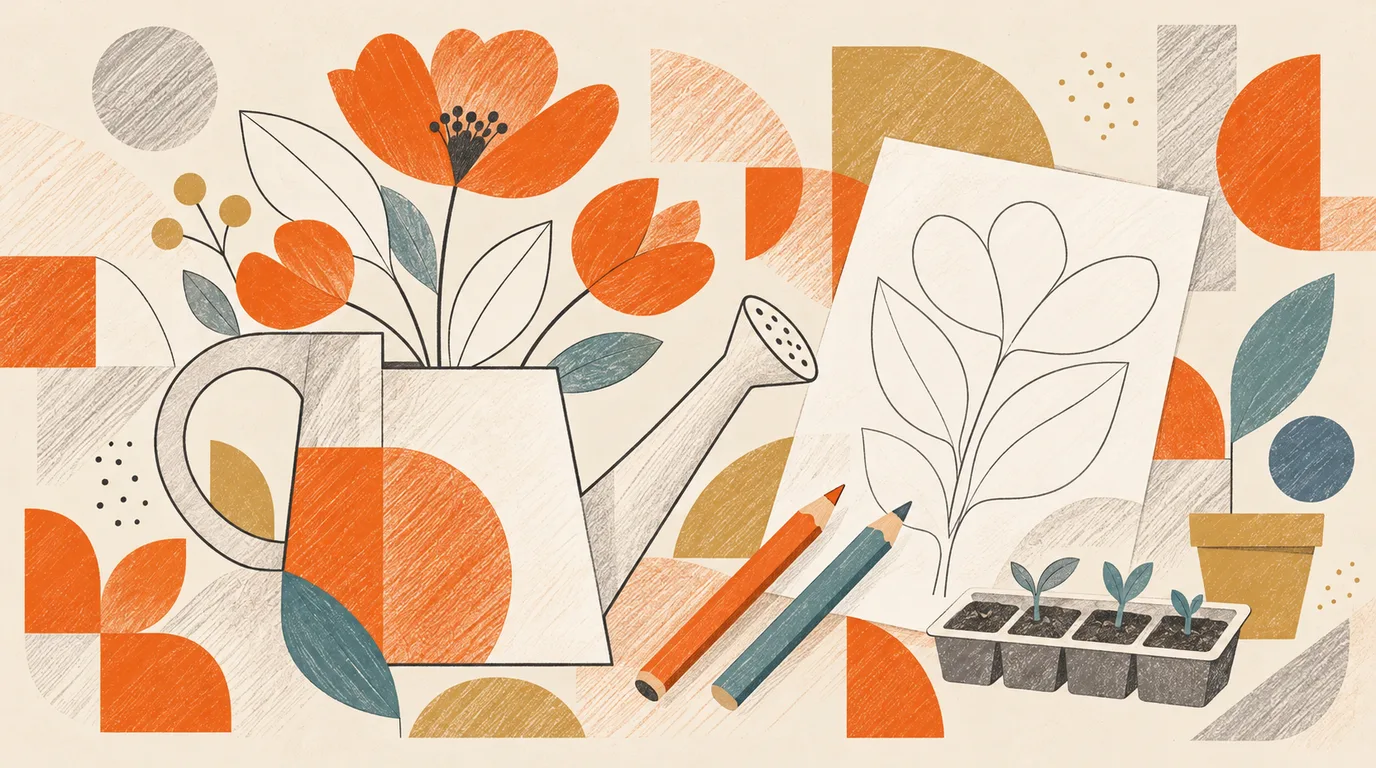
Consider a hypothetical set of botanical kitchen prints. You write original prompts for three related illustrations, choose and refine the images, and plan to sell ready-to-print JPGs. The set has a recognizable job: three coordinated prints for a kitchen wall. But if one image has garbled plant labels, or the three exports have inconsistent margins, it is not ready because the buyer cannot get the result in the preview. Fix the lettering and layout, or remove the flawed image. More files would not solve that problem.
This is a business choice as much as an aesthetic one. A single strong print may be easier to describe and support than a bundle whose files need explaining. Choose a bundle only when the pieces work together for the buyer, then decide exactly what uses your license will allow. Do not promise exclusive ownership or commercial reuse unless you can support those terms.
Check the creation chain before you export
Etsy permits artwork generated from a seller’s original prompts and requires disclosure of AI use in the listing description. It does not permit a PDF of another creator’s art merely because you gathered it, and it excludes AI prompt bundles from “Designed by a seller.” Disclosure does not cure an ineligible item.[1][2]
Write down your actual chain: the generator and plan used, your prompts and input images, any reference photos, fonts, textures or third-party assets, and the changes you made afterward. Open the current terms for your exact generator, account tier and intended commercial use. Check whether your inputs may be uploaded, what rights the provider grants or restricts for outputs, and whether any separate asset licenses cover the uses you offer buyers. A generator’s commercial-use allowance is not permission to use someone else’s copyrighted photograph, recognizable character, logo or likeness as an input or sell a result that infringes someone else’s rights. Etsy’s Seller Policy requires sellers to respect others’ intellectual property and accurately represent their items.[3]
Keep a record of your inputs, licenses and edits so you can explain the work you actually did. If a reference asset’s provenance is unclear, replace it or obtain permission before listing. For a disputed likeness, trademark or substantial resemblance, seek qualified advice rather than treating a prompt or a disclosure sentence as a legal clearance.
There is a second, distinct question: can you claim copyright in the finished image? The U.S. Copyright Office says human-authored expressive contributions may be protected in an AI-assisted work, but prompts alone do not establish copyright in machine-determined expression; the assessment depends on the particular contribution.[6] Etsy eligibility, provider terms and copyright protection are three different tests. Do not advertise “exclusive copyrighted art” based only on the fact that you generated it.
Make the deliverable match the preview
Export for the buyer’s stated use. For printable art, choose the aspect ratios and actual pixel dimensions you will supply, save a sensible JPG or PNG, and inspect it at the largest print size you claim. Check edges, lettering, repeated details, color and any crop. A high-resolution label on a small or flawed file does not make a larger print sharp. State the included dimensions and formats in the listing rather than asking the buyer to infer them from a framed preview.
For ready-made artwork, Etsy’s instant digital listing asks you to choose Digital files and upload the purchased files. Its current limit is five files, each no larger than 20 MB. Etsy shows buyers the uploaded file names, and those names cannot be edited after upload; name them for the contents before attaching them.[4] A ZIP can group a few sizes if the buyer understands how to extract it, but the easier package is usually the smallest one that fully serves the promised use.
Open the actual files in a different viewer, unzip the archive if you use one, and try the first action you expect a buyer to take. If you sell a printable, print a proof or inspect at the promised dimensions rather than judging only the small listing thumbnail. If the art requires software, include the requirement and a short start instruction. Etsy says digital purchases are accessed from a buyer’s Purchases page or receipt email; at the time checked, files cannot be downloaded in the Etsy app, so a buyer on a phone needs a browser.[5] Mention that route in instructions if your audience is likely to start on mobile.
If your finished files fit Etsy’s native attachments, use them. If they do not, an access PDF containing a correctly permissioned external file link can be a workable alternative: tell the buyer before purchase that Etsy delivers a PDF with a link, not the art files directly, then open the PDF and link without your seller login and test every target file. You remain responsible for keeping the link and permissions working. This is a delivery workaround, not a way around Etsy’s creativity, rights or listing rules.
List what you actually made
In Etsy’s listing editor, identify the item as a digital file, not a physical print. For seller-prompted AI art, put a plain disclosure in the description, alongside what you did: for example, “This artwork was generated with an AI image tool using my original prompts, then selected, edited and prepared as printable files.” Use the second half only if it is true. Etsy’s Creativity Standards explicitly require disclosure in the description, while its Seller Policy requires AI use to be disclosed in relevant listings.[1][3][4]
Say how many artworks and files the buyer receives, their formats and dimensions, whether the purchase is instant or made to order, whether anything physical ships, and what permitted use you offer. Show the finished art accurately; if you place it in a room scene for scale, make the digital-only status and the actual included image unmistakable. Etsy requires listings and images to represent the item accurately.[3] Do not imply the frame, room or editable source file is included if it is not.
Return to the botanical example: “Three printable botanical illustrations, delivered as JPG files in the listed sizes; no frame or physical print” answers more buyer questions than “premium AI art bundle.” The AI disclosure belongs beside that scope, not as a substitute for it. If the set needs substantial revisions, change the art and export first; a polished title cannot repair a crooked crop.
For a fuller explanation of the buyer’s download path, see how Etsy digital downloads work. If you are using ChatGPT for research or drafting as well as art, the separate ChatGPT digital-product guide covers those other jobs; this listing still needs its own art and rights checks.
Use a release test, not a hope test
Before clicking Publish, check in this order:
- Eligibility and disclosure: Your specific item reflects your own seller contribution, fits Etsy’s current Creativity Standards, and the description accurately discloses AI use. If it is someone else’s art or a prompt-only bundle, do not list it.[1][2]
- Rights: You can identify the generator terms for your plan and the permission for every outside input or asset. If an essential right is uncertain, pause the listing rather than making a confident license promise.[3]
- Buyer result: A named buyer use justifies the art and its scope. Open every export, test the intended print or digital use, and correct any visible defects.
- Handoff: The attached files fit Etsy’s current limits, or the access PDF and its link work without your login. The title, images, description, file names and instructions describe the same purchase.[3][4]
If the first two pass but the art still lacks a clear buyer use, make a better product before adding listings. If all four pass, start with the one tested offer. You can learn from real buyer questions and update it deliberately; generating another batch first only gives you more files to maintain.
Sources
[1] https://www.etsy.com/legal/creativity [2] https://www.etsy.com/seller-handbook/article/1275449912004 [3] https://www.etsy.com/legal/sellers [4] https://help.etsy.com/hc/en-us/articles/115015628347-How-to-Manage-Your-Digital-Listings [5] https://help.etsy.com/hc/en-us/articles/115013328108-How-to-Download-a-Digital-Item [6] https://copyright.gov/newsnet/2025/1060.html